Key takeaways
- Natural gray is a design choice on its own.
- Stains, dyes and integral color add depth and variety.
- Saw cuts, borders and inlays add pattern.
- Always view samples in your own lighting.
Natural concrete
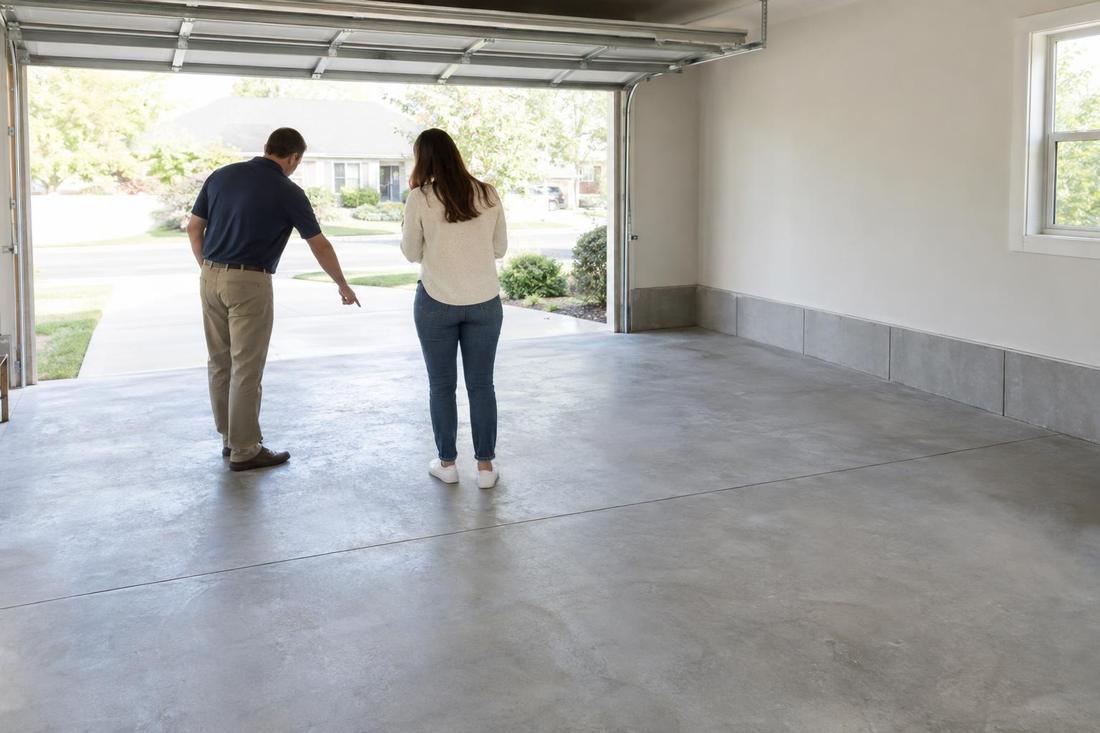
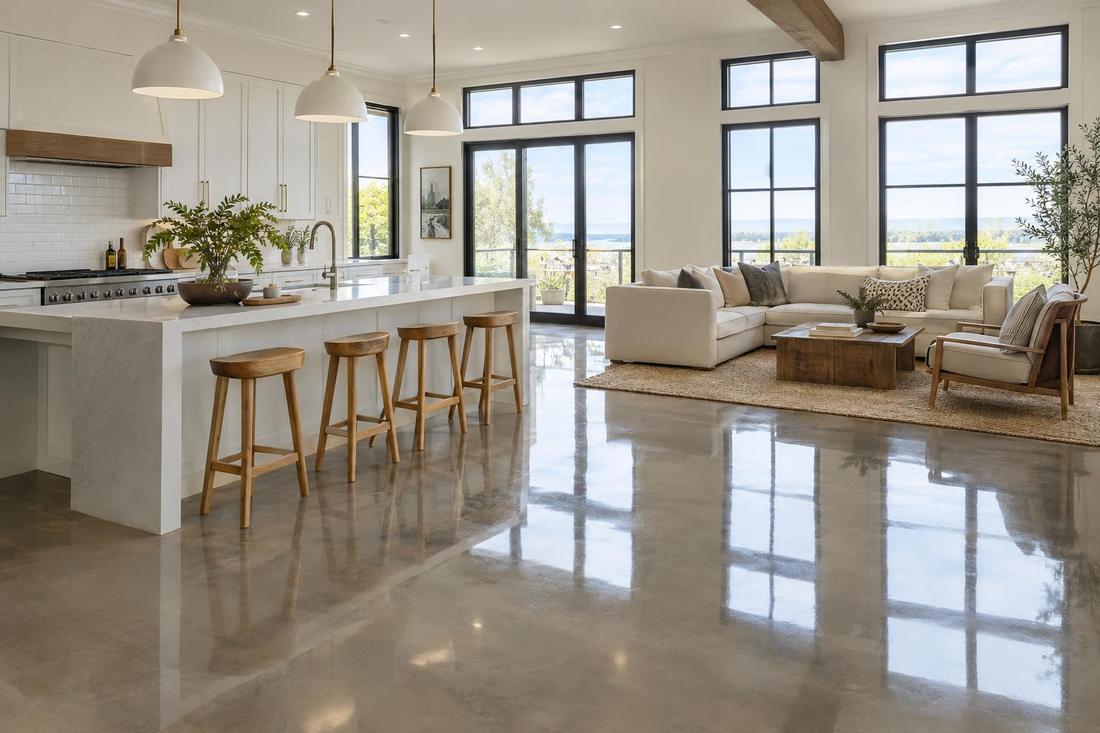
Gray concrete can range from cool charcoal to warm cream depending on the cement and aggregate. Polished with a satin finish, it looks calm and modern. Many people choose it because they like the honesty of the material.
Exposed aggregate adds a stone-like pattern.
Color: stain, dye and tint
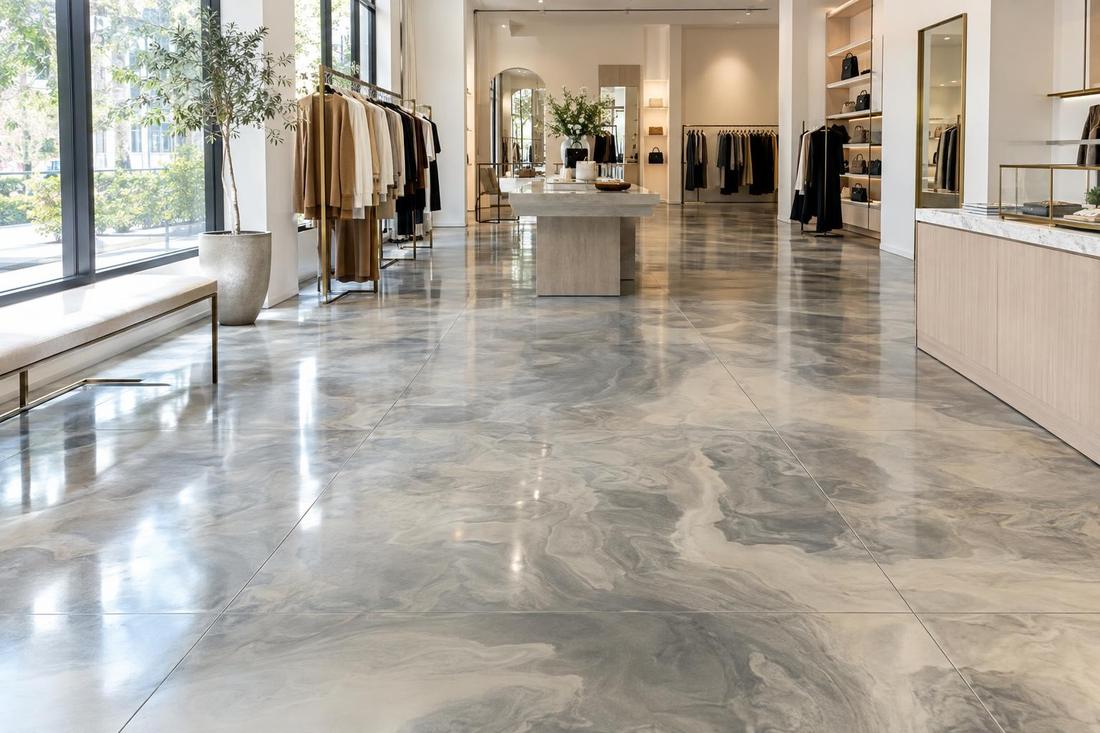
Acid stains create marbled earth tones, water-based stains give even color and dyes bring vivid, translucent shades. Integral color is mixed into the concrete before it is poured. Metallic epoxies add flowing color and shimmer.
Each method has a different look and different durability.
Pattern and detail
Saw-cut grids look like tile, borders frame a room, and stencil inlays add logos or designs. Stamped patterns copy stone or brick for outdoor floors. Good detail comes from careful layout.
Keep the design in proportion with the room.
Choosing with confidence
View samples under your own lights and next to your walls and furniture. Ask for a test patch on your floor. Think about how the color will age and how it will look when furnished.
Designers and homeowners across Nashville often start with two or three samples and narrow from there.
Official sources and further reading
These are independent organizations. Links open in a new tab.
Quick answers
Can I match a paint color?
Often closely, using stains and dyes, though concrete adds its own variation.
Does color fade?
Indoors, sealed color holds well. Strong sun can fade some dyes.