Key takeaways
- Slabs can pass water vapor from the ground even when they look dry.
- Trapped moisture causes blisters, peeling and haze under coatings.
- Tests tell you how much vapor the slab is passing.
- Moisture-control primers and different finishes are the usual fixes.
How moisture gets in
Soil under and beside a slab holds water. Vapor moves upward through the concrete, especially when there is no effective barrier below. New slabs also hold mixing water for a long time while they cure and dry.
Weather, drainage and the HVAC system all affect it.
What it does to finishes
A sealed or coated slab that is still passing vapor can blister, peel or turn cloudy. Adhesives under flooring can also fail. This is among the most common causes of finish failure on slabs.
The damage is often seen weeks or months after installation.
How slabs are tested
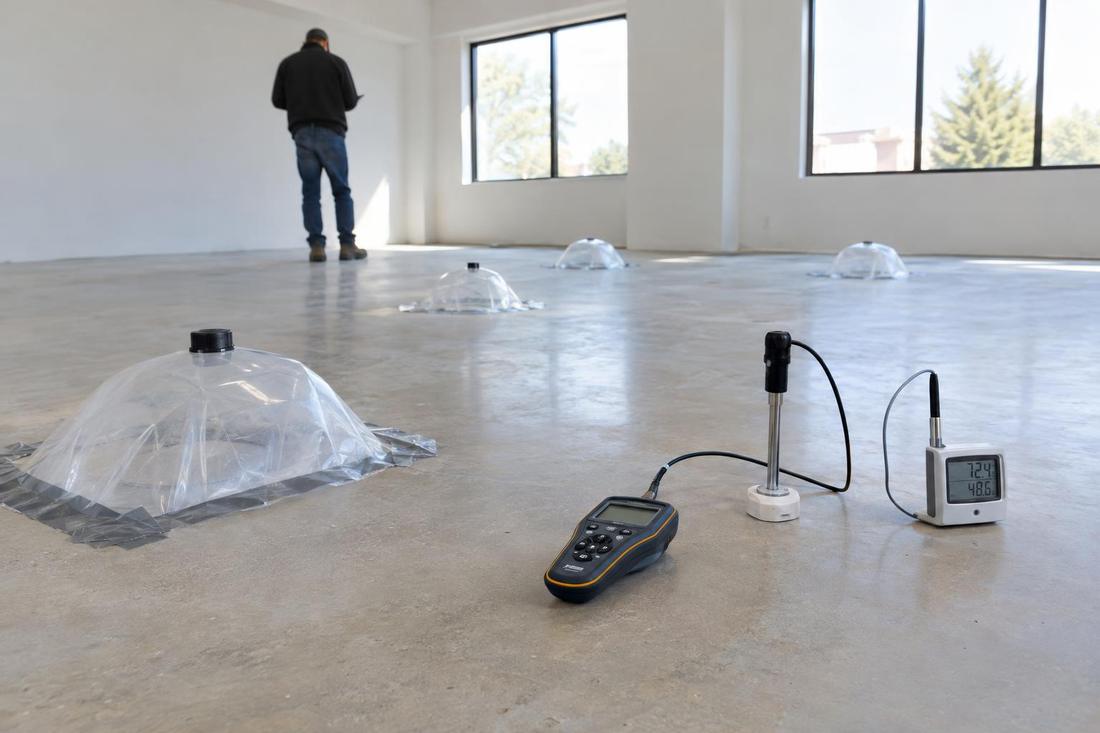
Common methods include calcium chloride test kits, which measure vapor emission, and in-slab relative humidity probes. Tests need time to read and must be done under suitable conditions.
Your contractor can explain what the numbers mean for your finish.
What to do about it
If readings are high, options include moisture-control primers, a different finish that tolerates moisture or waiting and retesting. Fixing drainage and gutters outside also helps.
In Middle Tennessee, with plenty of clay soil and rain, testing basements and garages is wise.
Official sources and further reading
These are independent organizations. Links open in a new tab.
Quick answers
Can I test moisture myself?
Simple plastic sheet tests give a hint, but proper tests are more reliable.
Will a sealer stop moisture?
Not by itself. Some products block vapor, and others do not, so the choice matters.