Key takeaways
- Polished concrete is a ground and hardened surface, not a coating.
- Epoxy and polyaspartic are coatings that add color and chemical resistance.
- Stains add color to the surface and are usually sealed.
- The best choice depends on the slab, the use and the look you want.
Polished concrete
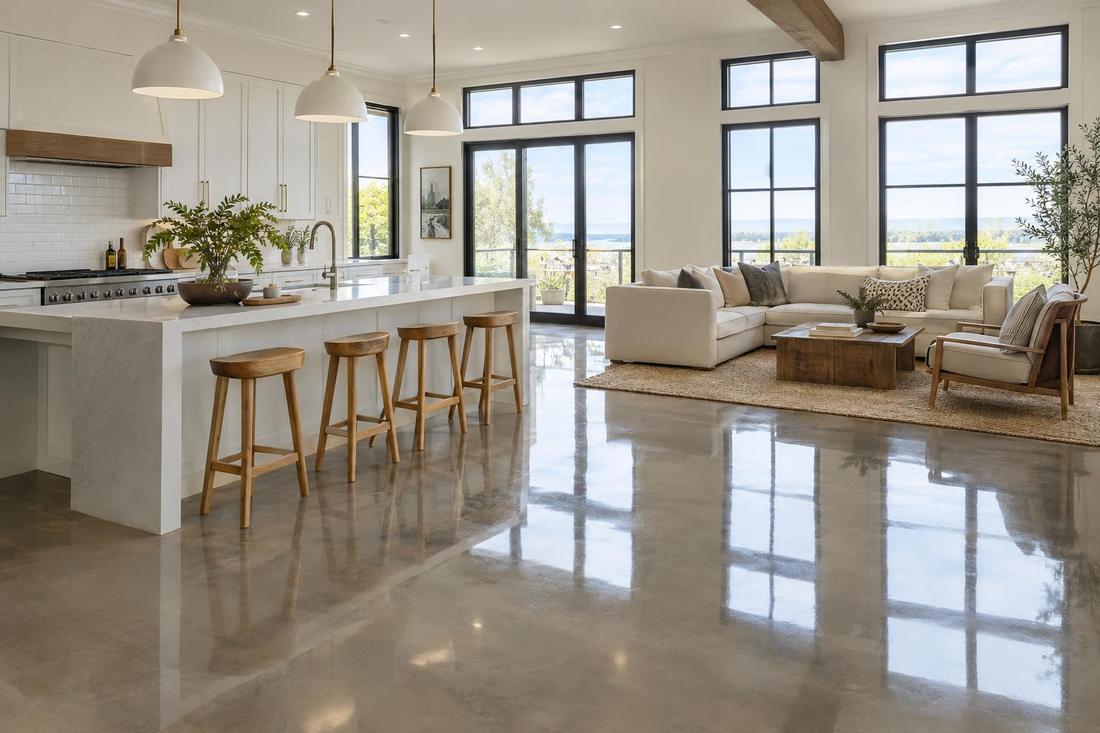
Polishing grinds the slab through finer and finer diamond grits and hardens it with a densifier. The finish is part of the concrete, so it does not peel. It suits homes, stores and warehouses that want a natural look with modest upkeep.
It reveals the slab as it is, including small flaws, so slab condition matters.
Epoxy and polyaspartic coatings
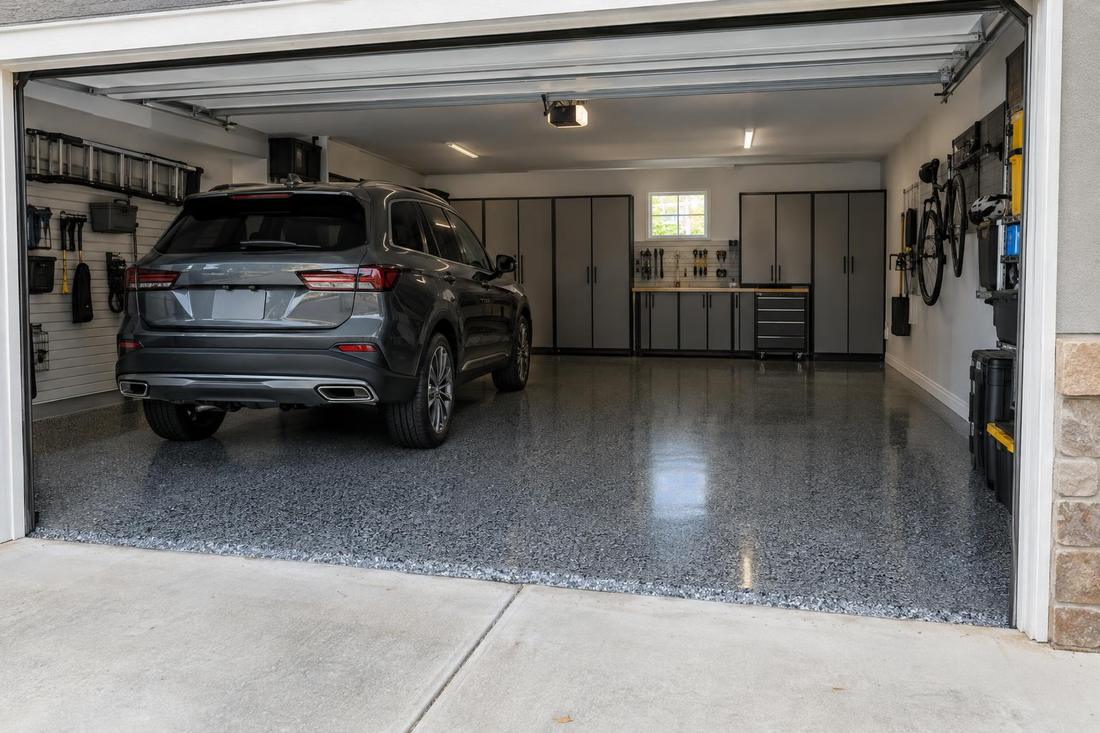
Coatings are applied on top of a prepared slab and form a seamless layer. They offer many colors, flakes and metallic effects and handle oil and chemicals well. They are common in garages, shops and kitchens.
Coatings depend on good preparation and a dry slab.
Stained concrete
Stains and dyes color the surface of the concrete, giving marbled or even tones. They are then sealed or polished. Stain suits spaces where color and character matter, such as living areas, restaurants and covered patios.
Acid stains give variegated tones, while water-based stains offer wider, more even colors.
Choosing between them
Think about wear, chemicals, moisture, color and budget. A garage that sees hot tires and oil often suits a coating, a shop or showroom may suit polish, and a living area may suit stain with a sealer.
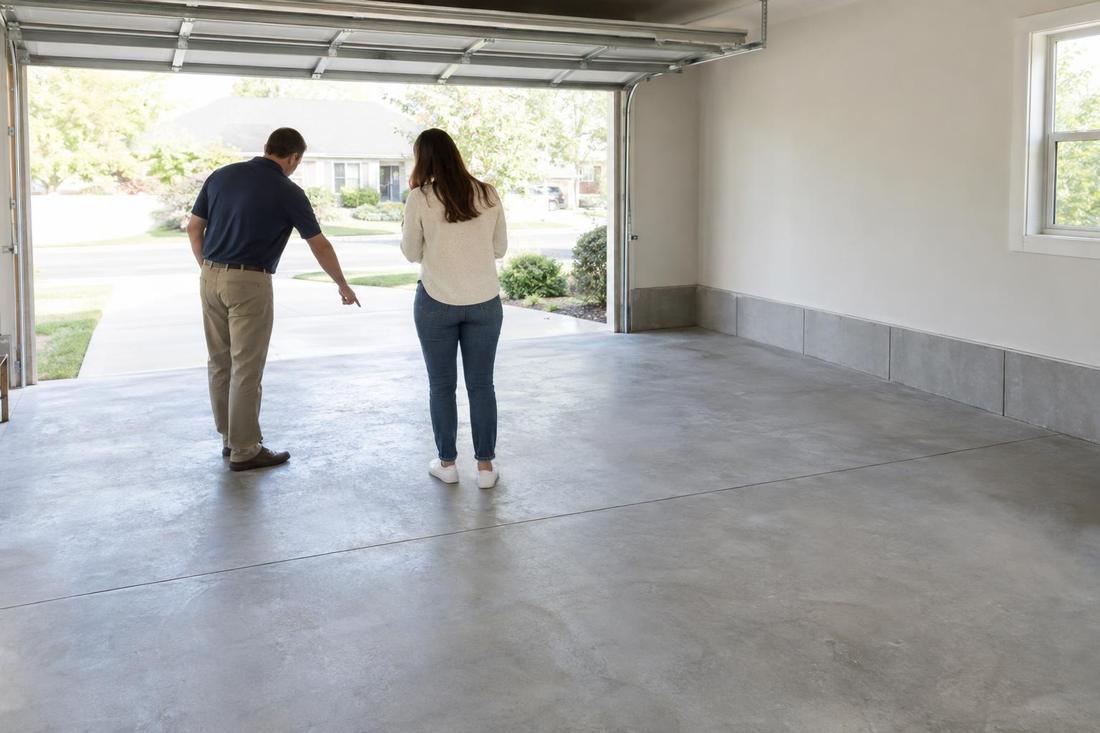
A site visit and a sample patch make the choice much easier.
Official sources and further reading
These are independent organizations. Links open in a new tab.
Quick answers
Can I combine finishes?
Yes. Many floors use stain or dye under a polish, or flakes under a clear coat. We can design combinations.
Which is the most durable?
It depends on the use. Polished floors resist wear well, and coatings resist chemicals well.